
Cleaning and replacing a 3D printer nozzle

Workshop · Maintain

Most nozzle problems are one of two things: a partial clog, which a cold pull clears, or wear, which nothing clears. Underextrusion that appears gradually and gets worse over weeks is wear. Underextrusion that appears suddenly mid-print is a clog. Abrasive filaments cause the first kind, and a brass nozzle running carbon fibre can widen enough to matter within a single spool.

  1. 01Heat and loadUp to printing temperature, then push filament through by hand.
  2. 02Cool it downLet the hot end drop until the plastic is firm but still gripped.
  3. 03Pull steadilyOne firm continuous pull. Yanking snaps it and leaves the debris in.
  4. 04Read the tipThe tip should come out shaped like the nozzle, carrying the debris.
  5. 05Repeat until cleanA tip that comes out clean and cone-shaped means the bore is clear.
Clearing a partial clog with a cold pull. Temperatures vary by material and hot end, so the sequence is shown and the numbers stay on the material profile.

The cold pull

Heat the nozzle so the filament inside softens, push a little through by hand, then let it cool to the point where the plastic is firm but still slightly pliable and pull it out in one motion. Debris embedded in the nozzle comes out attached to the plug.

Nylon and dedicated cleaning filament work better than PLA for this, because they stay coherent at the temperature where the plug needs to release. Repeat until the tip of the removed plug is clean and shows the nozzle profile.

Clog or wear?

Timing is the tell. A clog is abrupt: the print was fine, then extrusion dropped. Wear is gradual: prints have been getting slightly worse for weeks, walls are thinner than they should be, and the first layer needs more squash than it used to.

The other check is the hole. A worn nozzle bore is visibly wider and no longer circular. Once it is worn, cleaning does nothing and replacing is a few minutes and a small amount of money.

Brass, hardened steel, and when each belongs

Brass conducts heat better and is the right default for PLA, PETG, ABS and other unfilled materials. It is also soft, which is exactly why it is wrong for anything abrasive.

Carbon and glass filled filaments, and glow-in-the-dark and metal-filled compounds, all contain hard particles that widen a brass bore quickly. Fit hardened steel before the first print of those materials, not after the symptoms show, because by then the print quality has already been drifting.

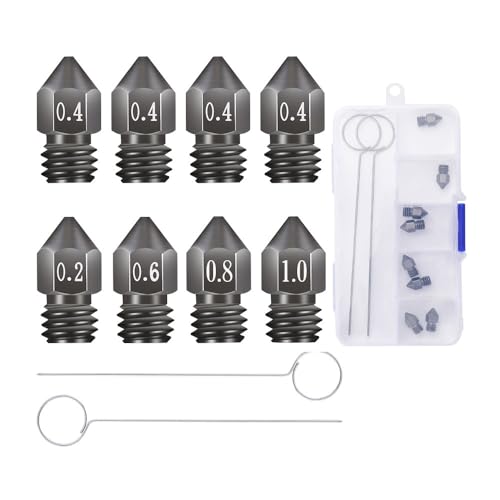
One caution: nozzles are not universally interchangeable. Thread, length and overall geometry vary between hot ends, so match the nozzle to your specific hot end rather than assuming an MK8 fits everything.
What this needs

Each item is listed with the specification that decides whether a given product will actually do the job, because that is the part product titles tend to leave out.

Nozzle cleaning kit

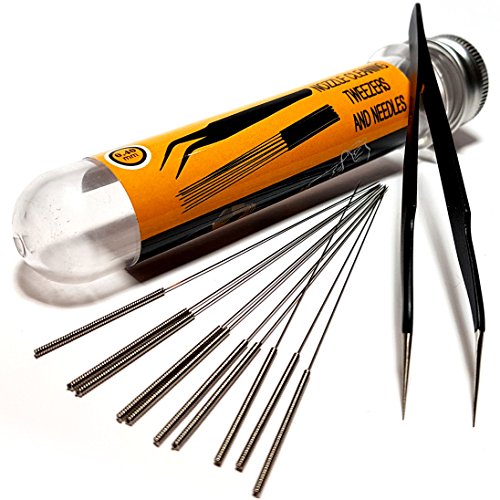
Needles sized to your nozzle diameter

Clears a partial blockage without a teardown. Needles thinner than the bore, so a 0.4mm nozzle wants 0.35mm needles rather than something that will score the inside.

Nozzle cleaning kit with needlesAssorted · Nozzle cleaning kit with needles0.4mm needles plus tweezers, thinner than the bore so the nozzle is not scored

Hardened steel nozzle

Matching your hot end thread and geometry, not just the size

Required for anything carbon filled, glass filled, glow-in-the-dark or metal filled. Check it fits your specific hot end: MK8 is a common pattern but not a universal one.

Hardened steel nozzles, MK8Creality · Hardened steel nozzles, MK8Hardened steel for abrasive filament. MK8 is a thread pattern, not a universal fit

Spare brass nozzles

Matching your hot end, 0.4mm unless you have a reason

Brass conducts heat better and is right for unfilled materials. Having a spare turns a worn nozzle from a lost evening into a five-minute swap.

MK8 brass nozzle assortmentXIFOWE · MK8 brass nozzle assortmentMK8 pattern in assorted sizes. Check MK8 matches your hot end before ordering

As an Amazon Associate we earn from qualifying purchases. Links above are affiliate links, and using them costs you nothing extra.

Common questions

How do you do a cold pull on a 3D printer?
Heat the nozzle so the filament softens, extrude a little by hand, then cool until the plastic is firm but still slightly pliable and pull it out in one motion. Debris comes out stuck to the plug. Nylon or dedicated cleaning filament works better than PLA.
How do I know if my nozzle is worn or clogged?
A clog is sudden: extrusion drops mid-print. Wear is gradual: prints degrade over weeks and walls come out thin. A worn bore is also visibly wider and no longer round. Cleaning fixes a clog and does nothing for wear.
Do I need a hardened nozzle for carbon fibre filament?
Yes, and fit it before the first print. Carbon and glass filled filaments, plus glow-in-the-dark and metal-filled compounds, widen a brass bore quickly enough to affect quality within a spool.