
Glow PLA print settings
Glow-in-the-Dark PLA · Intermediate
Glow PLA (Glow-in-the-Dark PLA) prints at 200-225°C with the bed at 50-60°C. No enclosure needed. Drying is rarely necessary.
PLA carrying strontium aluminate phosphor, which charges under light and releases it slowly in the dark. It prints like PLA and wears nozzles like a composite.
Settings at a glance
Ranges are typical manufacturer-published figures for this material class, not measurements we took. Always start with your filament maker’s own numbers where they differ. The price is an indicative street price for a 1 kg spool, not a live quote.
Good for
- Signage and wayfinding
- Props and costume pieces
- Light switch surrounds and door markers
- Toys
Avoid for
- Brass nozzles
- Fine detail
- Anything expecting sustained brightness
The problem people actually hit
The phosphor is a hard mineral, so it eats brass nozzles faster than most carbon-filled filaments. Fit hardened steel first. Brightness also depends on how much light it has absorbed, so a part kept indoors will glow far less than the spool photograph suggests.
Drying
Mildly hygroscopic. Dry at 45C for 4-6 hours.
Buying Glow PLA
Glow PLA is stocked unevenly by general retailers. A specialist supplier is usually the better source, both for availability and because they publish the spec sheet. Typical street price is $25-45 per 1 kg spool.
Check before you order
- Diameter 1.75mm unless your printer takes 2.85mm. Check before ordering, not after.
- Published diameter tolerance. ±0.02mm is good, ±0.05mm is loose and shows up as inconsistent extrusion.
- Fit a hardened nozzle first. This material is abrasive and will widen a brass nozzle within a print or two.
Not sure this is the right material? Compare all materials.
What you need to print Glow PLA
Gear that Glow PLA genuinely requires, with the specification that decides whether a given unit will actually work.
Hardened steel nozzle
Hardened steel or ruby, matching your hot end
Glow PLA is abrasive and will widen a brass nozzle within a print or two. Fit the hardened nozzle before the first print - the symptom, worsening underextrusion, looks like a dozen other faults.
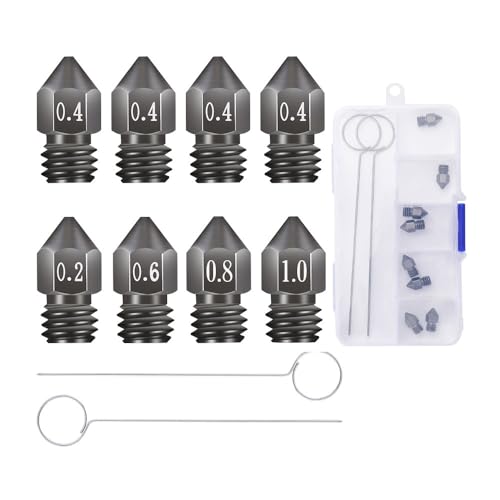 Creality · Hardened steel nozzles, MK8Hardened steel for abrasive filament. MK8 is a thread pattern, not a universal fit
As an Amazon Associate we earn from qualifying purchases. Links above are affiliate links, and using them costs you nothing extra.
Glow PLA questions
- What temperature do you print Glow PLA at?
- Glow PLA prints at a nozzle temperature of 200-225C with the bed at 50-60C. Start at the lower end of the nozzle range and raise it in 5C steps until layers bond cleanly.
- Does Glow PLA need an enclosure?
- No. Glow PLA prints fine on an open-frame printer at normal room temperature.
- Do you need to dry Glow PLA?
- Mildly hygroscopic. Dry at 45C for 4-6 hours.
- What is Glow PLA good for?
- Glow PLA suits signage and wayfinding, props and costume pieces, light switch surrounds and door markers, toys. Avoid it for brass nozzles, fine detail, anything expecting sustained brightness.
- How much does Glow PLA cost?
- A 1 kg spool of Glow PLA typically sells for $25-45. That is an indicative street price rather than a live figure, so check the retailer for today's cost.
Glow PLA or PLA?
PLA (Polylactic Acid) prints at 180-220°C with a 50-60°C bed and needs no enclosure. The default beginner filament. Prints cool, sticks well, warps very little, and needs no enclosure. It gives up heat resistance in exchange for all of that.
Read the PLA settings guide →After the print
The workshop steps that matter most for Glow PLA.