
PLA-CF print settings
Carbon Fibre Reinforced PLA · Intermediate
PLA-CF (Carbon Fibre Reinforced PLA) prints at 190-230°C with the bed at 50-60°C. No enclosure needed. Drying is rarely necessary.
PLA with chopped carbon fibre for stiffness and a matte black finish that hides layer lines completely. Easier than any other composite, and abrasive enough to need a hardened nozzle.
Settings at a glance
Ranges are typical manufacturer-published figures for this material class, not measurements we took. Always start with your filament maker’s own numbers where they differ. The price is an indicative street price for a 1 kg spool, not a live quote.
Good for
- Stiff brackets and mounts
- Matte cosmetic prints
- Drone and RC frames
- Jigs and fixtures
Avoid for
- Brass nozzles
- Parts needing impact toughness
- Fine detail below 0.4mm
The problem people actually hit
People expect carbon fibre to mean stronger. It means stiffer and more brittle: PLA-CF snaps where plain PLA would bend. Stiffness is the reason to choose it, not strength.
Drying
Mildly hygroscopic. Dry at 45-55C for 4-6 hours.
Buying PLA-CF
PLA-CF is easy enough to find, though from fewer brands than PLA or PETG. Stick to sellers who publish a diameter tolerance. Typical street price is $30-50 per 1 kg spool.
Check before you order
- Diameter 1.75mm unless your printer takes 2.85mm. Check before ordering, not after.
- Published diameter tolerance. ±0.02mm is good, ±0.05mm is loose and shows up as inconsistent extrusion.
- Fit a hardened nozzle first. This material is abrasive and will widen a brass nozzle within a print or two.
Not sure this is the right material? Compare all materials.
What you need to print PLA-CF
Gear that PLA-CF genuinely requires, with the specification that decides whether a given unit will actually work.
Heat-set threaded inserts
Brass, M3 unless your design says otherwise
Printed threads strip. If you are making stiff brackets and mounts out of PLA-CF, melting brass inserts in gives you a metal thread that survives being undone more than once.
See heat-set threaded inserts on AmazonHardened steel nozzle
Hardened steel or ruby, matching your hot end
PLA-CF is abrasive and will widen a brass nozzle within a print or two. Fit the hardened nozzle before the first print - the symptom, worsening underextrusion, looks like a dozen other faults.
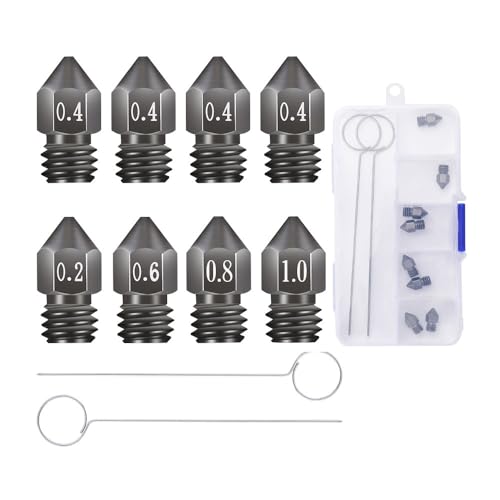 Creality · Hardened steel nozzles, MK8Hardened steel for abrasive filament. MK8 is a thread pattern, not a universal fit
As an Amazon Associate we earn from qualifying purchases. Links above are affiliate links, and using them costs you nothing extra.
PLA-CF questions
- What temperature do you print PLA-CF at?
- PLA-CF prints at a nozzle temperature of 190-230C with the bed at 50-60C. Start at the lower end of the nozzle range and raise it in 5C steps until layers bond cleanly.
- Does PLA-CF need an enclosure?
- No. PLA-CF prints fine on an open-frame printer at normal room temperature.
- Do you need to dry PLA-CF?
- Mildly hygroscopic. Dry at 45-55C for 4-6 hours.
- What is PLA-CF good for?
- PLA-CF suits stiff brackets and mounts, matte cosmetic prints, drone and RC frames, jigs and fixtures. Avoid it for brass nozzles, parts needing impact toughness, fine detail below 0.4mm.
- How much does PLA-CF cost?
- A 1 kg spool of PLA-CF typically sells for $30-50. That is an indicative street price rather than a live figure, so check the retailer for today's cost.
PLA-CF or PLA?
PLA (Polylactic Acid) prints at 180-220°C with a 50-60°C bed and needs no enclosure. The default beginner filament. Prints cool, sticks well, warps very little, and needs no enclosure. It gives up heat resistance in exchange for all of that.
Read the PLA settings guide →After the print
The workshop steps that matter most for PLA-CF.