How to store 3D printer filament

Workshop · Store filament

Storage and drying are different jobs. Drying removes moisture a spool has already absorbed; storage stops it coming back. A sealed container with indicating desiccant handles storage for almost everything, and the materials that genuinely need more are nylon, PVA and polycarbonate, which absorb fast enough to matter within days rather than months.

  1. 01Start dryA sealed spool is dry. One that shipped open may already need drying.
  2. 02Seal itAn airtight container. A cardboard box and a shelf are not storage.
  3. 03Add desiccantIndicating silica, so you can see when it is spent and recharge it.
  4. 04Measure itA cheap hygrometer inside turns a hope into a reading.
  5. 05Dry only when neededDrying is the repair. Storage is what stops you needing it.
Keeping filament printable. Storage and drying are different jobs. This is the storage one.

Not every filament needs the same care

PLA is mildly hygroscopic and will sit on an open shelf for months in a normal room without becoming unprintable. Treating it like nylon wastes money and shelf space.

Nylon, PVA and polycarbonate are at the other end: they take up enough water from ordinary room air within days to change how they print. Those belong in a sealed box between prints, and PVA belongs in one from the moment it arrives.

What a storage setup actually needs

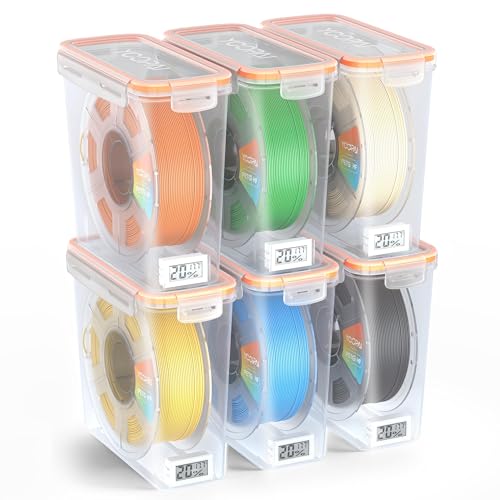
An airtight container, indicating desiccant, and a way to read the humidity. Under about 20 percent relative humidity inside the box, the filament is fine. Without a hygrometer you are guessing, and the guess is usually optimistic.

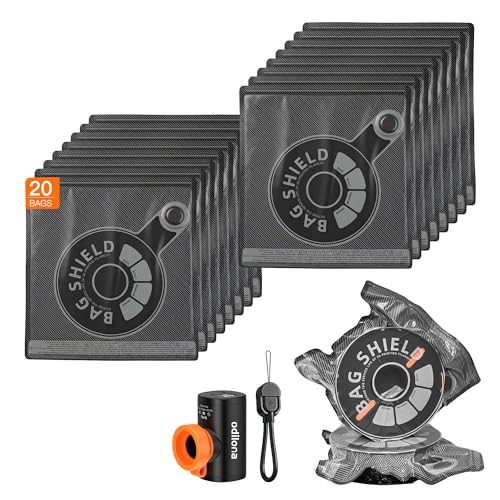
Indicating silica gel changes colour when it is spent and recharges in an oven at around 120C, so it is a one-off purchase rather than a consumable. Vacuum bags do the same job for spools you will not touch for months, at the cost of being awkward to open and reseal.

Printing from the box

For the thirstiest materials, storage between prints is not enough, because a long print gives the filament hours of exposure while it feeds. A dry box that feeds the printer directly solves that, and it is the normal setup for nylon.

If a nylon print starts clean and degrades over several hours, that is the mechanism, and no amount of pre-drying fixes it on its own.
What this needs

Each item is listed with the specification that decides whether a given product will actually do the job, because that is the part product titles tend to leave out.

Airtight storage with rechargeable desiccant

Sealed container plus indicating silica gel

Indicating gel tells you when it is spent and recharges at about 120C, so it is bought once. Storage without an indicator is storage you cannot verify.

Filament storage box with humidity monitorYOOPAI · Filament storage box with humidity monitorSealed box with a built-in humidity readout, so the storage can be verified

Hygrometer

Small digital unit that fits inside the box

The only way to know whether the box is working. Under about 20 percent relative humidity you can skip a drying cycle you would otherwise run on a hunch.

Digital hygrometerTempPro · Digital hygrometerSmall enough to sit inside a storage box, which is the only place the reading matters

Vacuum storage bags

Valve type, sized for a 1 kg spool

For spools going away for months. Removing the air outright beats desiccant alone for long-term nylon and TPU.

Filament vacuum storage bags with pumpOdilona · Filament vacuum storage bags with pumpSized for 1 kg spools generally, with no printer-brand fit claim

As an Amazon Associate we earn from qualifying purchases. Links above are affiliate links, and using them costs you nothing extra.

Common questions

Do I need to store PLA in a dry box?
Usually not. PLA is only mildly hygroscopic and keeps for months on an open shelf in a normal room. Nylon, PVA and polycarbonate are the materials that genuinely need sealed storage between prints.
What is the difference between drying and storing filament?
Drying removes moisture the spool has already absorbed and needs heat. Storage stops moisture returning and needs a seal and desiccant. Doing one without the other wastes the effort.
What humidity should filament be stored at?
Under about 20 percent relative humidity inside the container. A small hygrometer in the box is the only way to know, and rechargeable indicating desiccant is what gets you there.