Wash the part before you touch it with anything
Handling a printed part puts skin oil into the surface texture, and paint will not key through it. Warm water and dish soap, then dry fully, and handle it by an edge or with gloves afterwards.
This costs two minutes and it is the difference between a finish that survives handling and one that lifts in sheets the first time it is picked up.
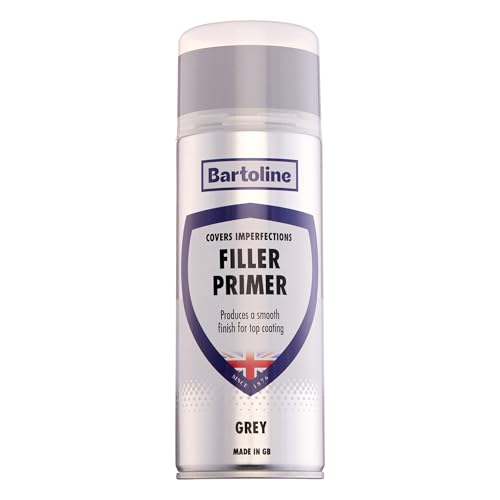
Filler primer does the work sanding cannot
Sanding takes the peaks off the layer lines but it will not fill the valleys, and paint is far too thin to bridge them. Filler primer, sometimes sold as high-build or sandable primer, is thick enough to sit in those valleys and give you a surface to flatten.
The sequence that works is sand, prime, sand the primer, prime again if lines still show. Each pass is faster than the one before it because there is less left to remove. On a part with visible layer lines, expect two primer coats.
Primer also gives paint a consistent colour to sit on, which matters more than it sounds. Spraying a light colour straight onto a dark print costs several extra coats and buries detail.
Which paint on which plastic
Once a part is primed, the primer is the surface and the paint no longer has to bond to the plastic at all. That is the point of it, and it is why the same acrylic works over PLA, PETG and ABS alike.
Unprimed is a different question. Acrylics will sit on PLA reasonably well. PETG is a poor host for paint without primer, and ABS is chemically vulnerable to solvent-based paints, which can soften and craze the surface. If you are painting straight onto plastic, test on a scrap piece from the same spool first.
Spray in thin coats and let each flash off. A heavy coat runs, and a run on a textured print cannot be sanded out without going back to bare plastic.
Heat, again
PLA softens at temperatures a dark part reaches in sunlight, and it will certainly soften if a heat gun is used to speed drying. Let paint cure at room temperature.
This is the same constraint that governs sanding PLA. The material is not being awkward, it simply has a low glass transition, and every finishing step has to respect it.